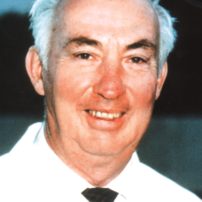
His earlier Life
Doctor Norman Shumway was a very accomplished heart specialist at Sandford University. He was a pioneer in his field and competed against Prof. Chris Barnard to perform the first-ever heart transplant. Although Dr. Shumway and his colleague, Doctor Richard Lower didn’t perform the world’s first successful heart transplant, Prof Chris Barnard used techniques developed by the two surgeons to perform the transplant.
Dr. Shumway was born in Michigan in 1923. He was a keen debater growing up, winning the State Championship, and placing second in the district debating contest. He graduated as valedictorian of his High School, showing early on his intelligent spirit.
In 1941 He enrolled at the University of Michigan, where he studied toward a law qualification, a field quite different than his later study field of Medicine. His career as an undergraduate law student was cut short as he was drafted by the American Army after a single year. He was sent to a college for engineering training. After six months Norman Shumway was given a medical aptitude test, where he was asked the question” If you pass the test, would you prefer a career in Medicine and Dentistry”. Thinking that he had no knowledge about Infantry, Shumway chose medicine as he thought they would much rather need doctors than dentists. Little did he know that his small answer changed the course of medicine forever. He finished his pre-med at Baylor University but had to wait for placement at a medical school, causing him to work as an orderly at Western State Medical Institute. Finally, in 1945, a spot opened at Vanderbilt University, and he was finally enrolled as a medical student. As a medical student, Shumway spent significant time at the University’s medical library, where he discovered many medical journals and notes pointing to the University of Minnesota. He was accepted for a surgical residency in 1945, under the mentorship of pioneers Doctor Owen Wangensteen and Doctor Lillehei. His residency was interrupted by a two-year stint in the Air Force, due to the Korean Conflict.
During his residency, he met Mari Lou Stuurmans, a public health nurse. The two married in 1951 before he left for the Air Force. The couple had three children, one born during his time in the force, while the other two were born in Minnesota.
His surgical career
Upon his return to the University of Minnesota, He took part in clinical surgery. He stated that “the most difficult part of cardio surgery is getting a chance to do it.” He also worked alongside the Heart pioneer, Prof Chris Barnard. In 1965, he received his surgical Doctorate. Two years later he started a new position as an instructor of surgery at the University of Stanford.
It was at the University of Sandford where Shumway started his research into Heart Transplantation. In the early years, his research mainly focused on developing techniques that could cool the heart down, giving surgeons leeway to do heart repairs.
On 22 July 1958, Shumway, alongside his research partner Doctor Richard Lower, successfully brought a dog’s heart back to life after it had been stopped and placed in saline for an hour. This victory planted the seeds of a long race to be the first surgeons to successfully perform a heart transplant.
In early 1959, the Two doctors started experimenting with cardiac autotransplantation, by removing dogs’ hearts and replacing them in the same animal. By the summer of 1959, Shumway had his first success in canine cross transplantation. With the heart still beating up to 8 hours after the surgery. An opportunity presented itself to Drs Lower and Shumway when the Stanford Medical School was moved from San Francisco to the main Stanford campus in Paulo Alto. The position of Chief of cardiac surgery at the new Campus. With great influence from various other doctors, the new chairman of surgery, Dr. Garrot Allen, offered Dr. Shumway the position, “Till a bigger name can fill the position”.