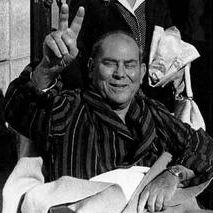
The Road to Deterioration
During the Second World War, Blaiberg joined the South African Army Medical Corps, where he served as a Captain, leading a dental unit in Italy and the Ethiopian empire. At the age of 45, Blaiberg experienced his first heart attack, which motivated him to close his practise and retire. 13 years later in 1967, Blaiberg’s health deteriorated, causing his heart to go into failure.
Previously, this meant certain death, but luckily for Blaiberg, Prof Barnard was fighting for the opportunity to perform the first successful heart transplant. As his health deteriorated, Prof Barnards success rate was improving and on the third of December 1967, Chris Barnard, along with his brother, Marius Barnard, and his equipped medical team- performed the first heart transplant on Louis Washkansky.
Controversy
On the 3rd of January of 1968, Dr Phillip Blaiberg received the heart of a 24-year-old donor- Clive Haupt. This was the most successful heart transplant yet, but many critics came forth as the donor was coloured and the recipient white. Yet, many focused on the statement that “The relief of suffering knows no colour bar”.
Although controversial, Blaiberg was quickly transcended into Heroism, as he was in high spirit only days after his operations. The surgery was a huge success and Blaiberg quickly returned to normal life. Blaiberg sadly passed away from chronic organ rejection on 17 August 1969, but his transplant gave way for the spreading of Heart transplants taking place around the globe. By the end of August 1968, there were 34 heart transplants performed, in contrast to December of 1968, where 100 hearts were transplanted.